Patient perspectives
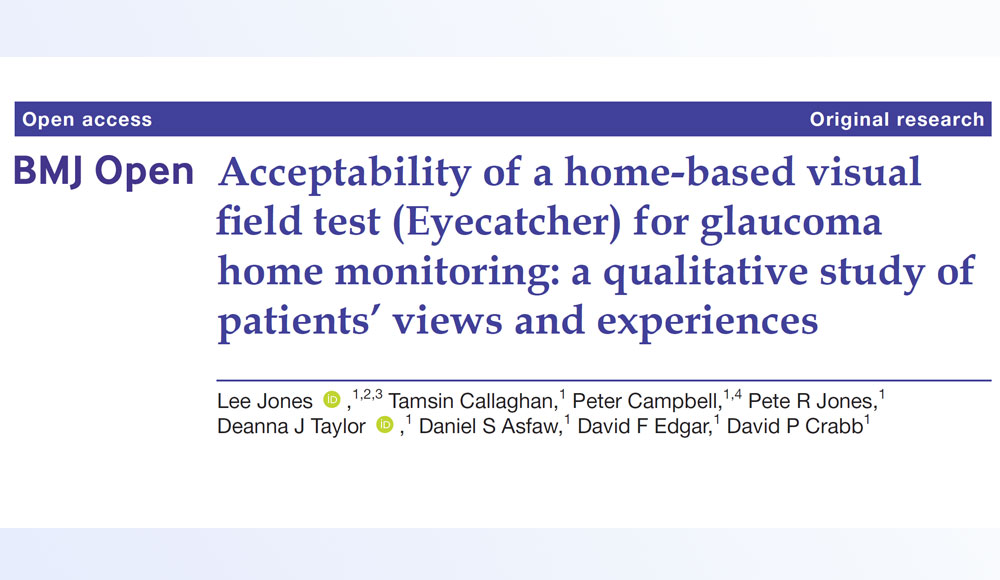
Here we explore the views of glaucoma patients on the pros and cons of Eyecatcher, and on vision home-monitoring in general
Read the paper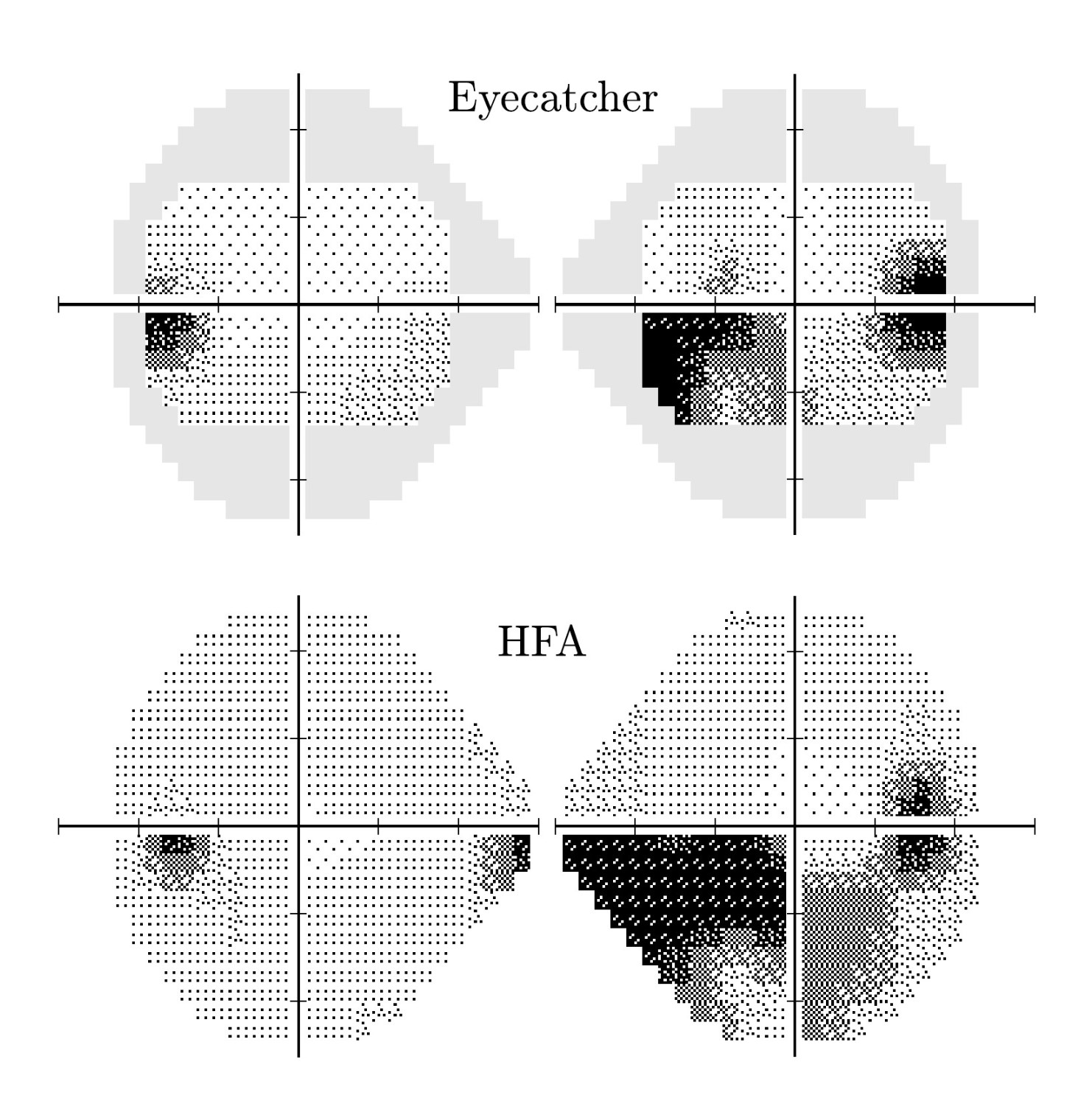
We have shown that Eyecatcher can be used by patients at home, and that the results agree strongly 'gold standard' vision tests conducted in clinic (94% correlation).
See the research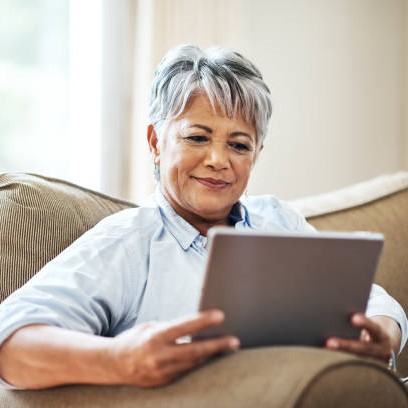
From its inception, Eyecatcher has been designed to be simple and pragmatic. It is inexpensive, portable, and easy to use.
See the full test output
We are an experienced group of clinicians and academics, based in the Division of Optometry and Visual Sciences at City, University of London [link]. City's optometry school was established in 1898, and is one of the UK's leading centres for vision teaching & research.
Learn more about who we are
We work with patients and other key stake holders to continuously refine the Eyecatcher technology. Early development of Eyecatcher was also supported by generous grants from many of the UK's leading eye charities.
We are world-leading team of university-based academics and practising clinicians, specialising in the study, management, and treatment of glaucoma. Our group includes professors in statistics and optometry, practising clinicians, and computer scientists, all of whom are leaders in their field.

With aging populations and health services worldwide under unprecedented strain, it has long been recognised that people with chronic eye conditions, such as glaucoma, need to be empowered to monitor their own eye health at home. For example, even before COVID, it was believed that 22 patients a month were suffering severe, irreversible sight loss in the UK alone, due to delayed glaucoma hospital appointments. This situation is only likely to get worse. Vision home-monitoring is the only way to provide sustainable, cost-effective healthcare, and would also confer a host of patient benefits, including reduced travel time, fewer hospital appointments, and more frequent checkups.
The challenge, historically, is how to actually deliver an effective, pragmatic, and scalable home-monitoring solution. How do we take an existing clinical test, and turn it into something 100 times smaller and cheaper, without sacrificing the accuracy or precision of the test? How do we package such a test in a way that is intuitive and robust enough for patients themselves to operate at home, unsupervised, for months or years at a time? And how do we transmit the data back to clinicians in a way that is secure and easily intelligible?
Our group is comprised of professors, lecturers, and practising clinicians all specialising in the care and mangement of glaucoma. Together, we have spent the last 5 years developing a new vision home-monitoring device, which we call Eyecatcher, specifically designed to answer these questions.
By 2019, we demonstrated that ordinary digital technologies could be used to accurately measure glaucomatous vision loss (Eyecatcher v1.0)
By 2020, we were the first group in the world to publish evidence that glaucoma patients were willing and able to use such a device at home, unsupervised (Eyecatcher v2.0).
Throughout 2021 we have used COVID to rebuild Eyecatcher from scratch: making it smaller, lighter, cheaper, and more scalable. In the process, we have also incorporated a range of features requested by patients and clinicians over the years, and in doing so have taken the opportunity to translate all of our research code into a brand new Android app, designed to work with the next generation of lightweight "smartglasses". The result is an entirely novel approach to assessing vision, and a Minimal Viable Product (Eyecatcher 3.0) that we believe is ripe for commercialisation . Our goal now is to work with a commercial partner to get ensure that as many people as possible have access to this potentially sight saving technology.
Eyecatcher is built on years of careful research and development. See below for a selection of recent, peer-reviewed papers.
Here we explore the views of glaucoma patients on the pros and cons of Eyecatcher, and on vision home-monitoring in general
Read the paper
Real glaucoma patients are able to accurately measure their own vision at home.
Read the paper Read the preprint (free)
Eyecatcher can be used to rapidly triage patients in glaucoma waiting rooms.
Read the paper
Machine learning and computer vision techniques can be used to detect lapses in concentration.
Read the paper
Eyecatcher is able to accurately and reliably map out the visual field of young, normally sighted adults.
Read the paper
How advanced "self-calibrating" computer monitors can be used to run Eyecatcher with minimal setup.
Read the paper
Eyecatcher is able to accurately and reliably map out the visual field of glaucoma patients.
Read the paper